The Conversations Your Members Cannot Have Anywhere Else
Last week, I was keynoting at a conference and invited the participants to practice reinvention.
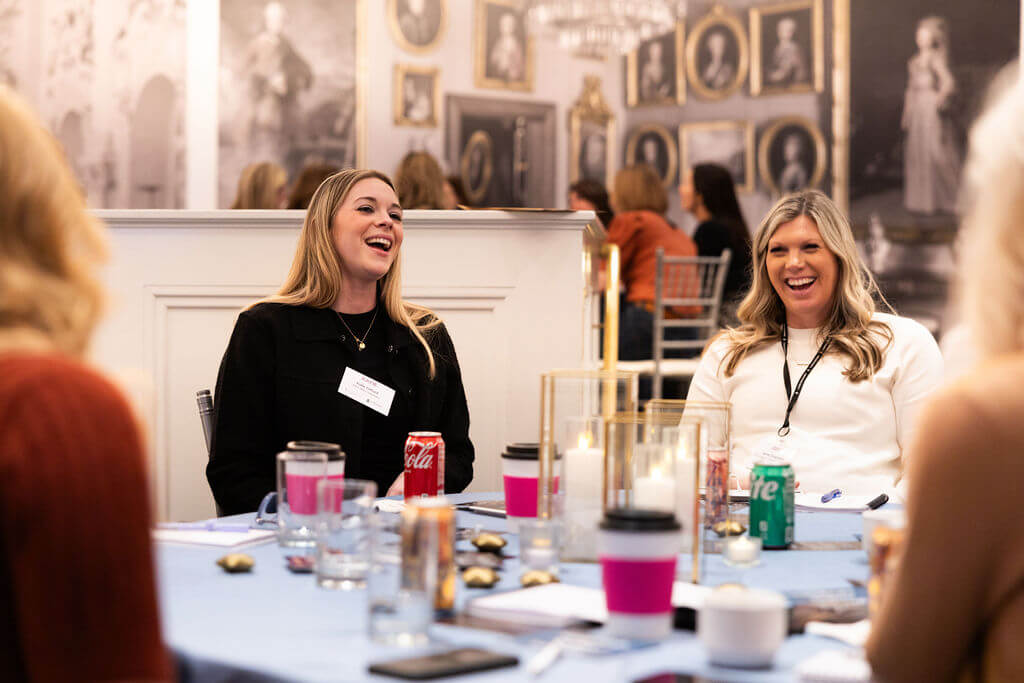
In small groups, they chose a challenge and began generating possible solutions. Before long, the room was buzzing. Participants shared ideas for streamlining processes, working within budget constraints, and approaching familiar problems in new ways.
As I listened to one table's conversation, a participant paused and said, "This is why it's so valuable to come to conferences like this."
I knew immediately that she had named something important. One person had shared a challenge. Someone from another organization offered an idea. Another person built upon it. They compared experiences, asked questions, laughed, and began imagining possibilities together.
They were not simply receiving information. They were creating insight together.
In a time when artificial intelligence can provide information, summarize emerging trends, and generate possible solutions within seconds, moments like this offer an important clue about the future value of associations.
The opportunity is not simply to give members more information. It is to create conversations they cannot have anywhere else.
Bringing People Together is Only the Beginning.
Associations have an extraordinary advantage: they can gather people who share a profession, industry, purpose, or cause.
These people understand one another's work. They recognize the acronyms, pressures, personalities, and constraints. They bring years - sometimes decades - of experience into the room.
But physical proximity creates only the possibility of connection. It does not guarantee it.
We have all attended conferences where we sat beside people for an entire day, exchanged pleasant conversation, and left without ever discussing the challenges that brought us there. We attended the same sessions, ate lunch at the same tables, and perhaps collected a few business cards. Yet we never reached the level of conversation where genuine learning and connection begin.
Trust requires intentional design.
An association's advantage is not only its ability to gather people in the same room. Its greater advantage may be its ability to create a room where people feel safe enough to tell the truth.
"We tried that, and it failed."
"Our board is resisting this."
"We don't have the staff or budget to do what everyone recommends."
"I'm not sure what to do next.""We found something that is beginning to work. You are welcome to use it."
This is where networking becomes meaningful thought partnership. Members move beyond polished success stories and begin sharing the hard-earned wisdom beneath them.
Trust Changes the Conversation
Before becoming an executive coach and speaker, I spent many years as a healthcare chaplain. Again and again, I entered rooms where people were carrying things they had not yet said aloud.
That work taught me that people rarely begin with the deepest truth. They first need to know what kind of space they are in. They notice whether anyone is truly listening. They watch how uncertainty, emotion, and silence are received. They take small risks before deciding whether it is safe to take a larger one.
 The same is true in professional gatherings.
We cannot place people around a table, ask them to "be vulnerable," and expect meaningful connection to appear. Nor should people be pressured to disclose more than they wish to share. Trust grows when an experience is structured with care and participants retain agency over what they contribute.
The opening question matters. "What are your biggest challenges?" may produce broad and predictable answers. A more thoughtful question can invite people to go deeper:
- "What part of your work is becoming harder but is not yet being talked about honestly?"
- "What are you trying to solve without enough time, resources, or support?"
- "What is one thing your organization has learned the hard way?"
Questions like these communicate that unfinished answers are welcome here.
The sequence matters too. Most people need time to think before they are ready to speak. Individual reflection followed by conversation with one other person creates a manageable first step. From there, people may be more willing to contribute within a small group and eventually to the larger room.
This is more than an audience-engagement technique. It is trust scaffolding.
Making Room for What We Do Not Already Know
In a culture that rewards busyness and polished expertise, admitting uncertainty can feel risky.
Association professionals and the members they serve are frequently expected to know what to do next - even when technology, workforce expectations, financial realities, and member needs are changing faster than anyone can confidently interpret them.
People need places where they do not have to pretend they already know.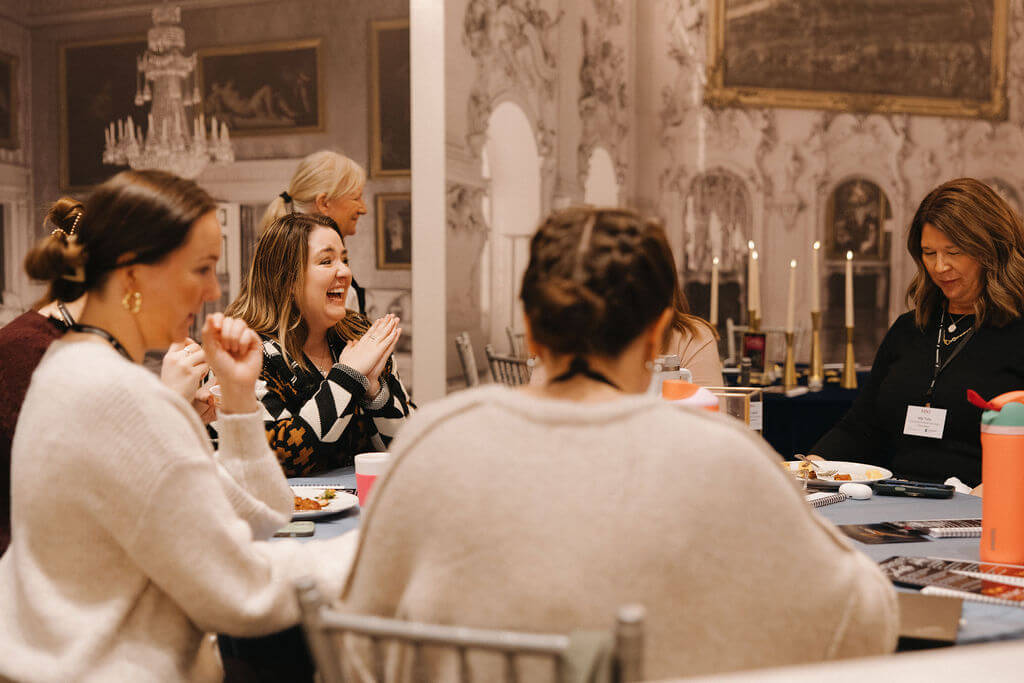
Imagine the value of an association becoming known as the place where members can bring the questions they cannot easily discuss elsewhere.
A place where someone can name a challenge without immediately being judged or fixed. A place where lessons from failure are valued alongside examples of success.
A place where members can say, "We are struggling with this too," and begin working on it together.
That depth of conversation does not require making every workshop intensely personal. It does require moving beyond passive content delivery.
Useful content provides a starting point - a framework, shared language, research, or a different way of seeing a familiar problem. Thoughtful facilitation then helps participants connect that content to the realities of their work:
● What does this mean in our context?
● Where are we getting stuck?
● What have we already tried?
● What assumptions might we need to reconsider?
● What are others learning that could help us?
● What could we test next?
The wisdom of the speaker matters. So does the collective wisdom already present in the room. When associations create the conditions for those forms of wisdom to meet, members gain something much richer than another set of notes to review later.
They gain perspective, trusted relationships, and ideas shaped by people who understand the real-world context in which those ideas must work.
Designing for Candor and Generosity
Trust deepens when leaders model the kind of conversation they hope to create.
When every presentation features only finished solutions and impressive outcomes, people learn to protect their uncertainty. When a respected leader says, "Here is what we tried, here is what did not work, and here is what we are learning," the room receives a different message: you do not have to arrive with a perfect answer to contribute something valuable.
Clear expectations also matter. Participants need to understand how their stories will be treated. An association can establish that personal details remain confidential while lessons may be carried forward without identifying the person or organization. That gives people greater confidence to share candidly.
The conversation should also be reciprocal. When someone names a challenge, the goal is not for the group to descend upon them with advice. Others can offer questions, experiences, resources, and connections. Everyone has something to contribute and something to learn.
And whenever possible, the relationship should continue beyond a single workshop. One meaningful conversation can open the door to trust. Repeated interaction allows people to walk through it.
Associations can support that continuity through peer circles, recurring cohorts, facilitated follow-up conversations, or simply a clear invitation for participants to choose one thought partner with whom they will reconnect.
The Association Advantage
Dr. Nadya Zhexembayeva, a leading voice in organizational reinvention, writes that organizations must make adaptability "a part of daily life." Associations can help their members develop that capacity - not only by teaching them about change, but by giving them places to practice navigating it together.
AI will continue to expand what individuals can learn and create on their own. Associations can use those tools to reduce administrative burden, expand access, and serve members more effectively.
At the same time, the growth of AI makes trusted human spaces even more valuable.
Information is abundant. Honest conversation is not.
Thought partnership is at a premium. So are places where people can lower their guard, examine an unfinished question, learn from someone else's experience, and discover that they do not have to navigate change alone.
The association advantage will not come simply from filling a room. It will come from what members are able to say, learn, and create because of the trust within it.
Physical proximity creates the possibility of connection.
Intentional design can turn that possibility into one of the most meaningful benefits an association provides.
Learn more about Sarah & Connect on LinkedIn